Exterior Painting for Industrial Buildings
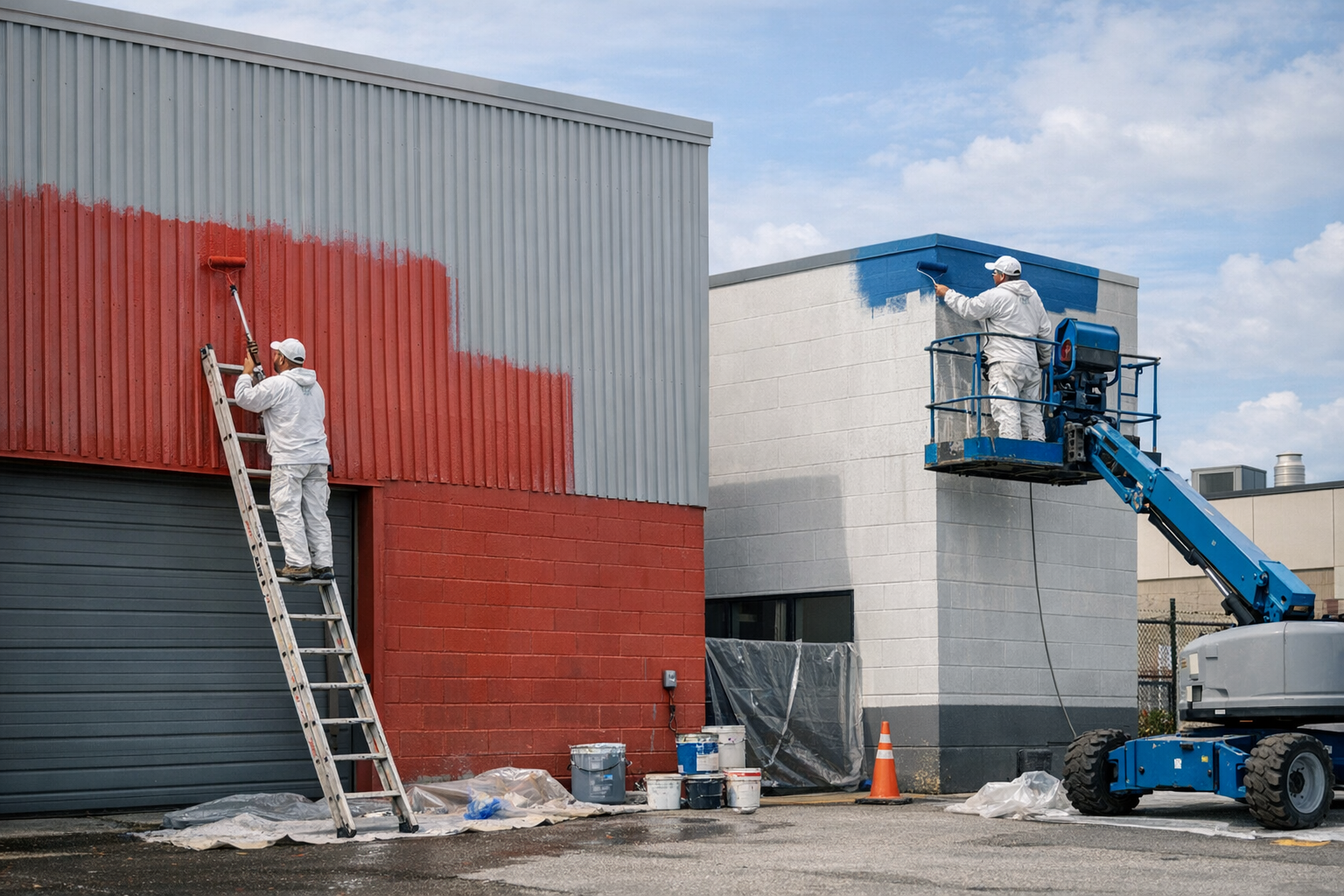
Industrial Building Types and Exterior Painting Needs in Southern Ontario
Why it matters
Industrial exteriors do not all fail in the same way. A coating system that works on one building type can break down fast on another, especially where surfaces face chemical residue, impact, or frequent washdowns. That is why building type matters before any exterior painting scope is priced or scheduled.
For owners and managers planning exterior painting for industrial properties in Southern Ontario, the building’s use should shape the prep, product choice, and access plan. A warehouse wall, a processing plant shell, and a steel-framed factory frontage each create different risks, and those differences affect how the work should be approached in the sections below.
Manufacturing Facilities and Processing Plants
Manufacturing and processing buildings often have the hardest exterior conditions. Exhaust residue, periodic moisture, and frequent cleaning can shorten coating life if the surface prep is too light or the wrong finish is used.
A common mistake is treating the whole exterior as one uniform envelope. Areas near vents, roof penetrations, and process discharge points usually need closer inspection and sometimes a different coating approach. If those zones are painted like low-exposure walls, early peeling and staining are likely.
Timing is another constraint. Many plants cannot tolerate overspray near air intakes, open service points, or active delivery routes, so production schedules often limit when exterior painting can happen safely.
Warehouses, Storage Buildings, and Logistics Hubs
Warehouses usually present large wall areas, long elevations, and repeated traffic exposure around corners and entrances. The challenge is less about chemical attack and more about surface wear, impact, and keeping a consistent appearance across very visible facades.
One tradeoff is speed versus prep quality. These buildings can look simple from a distance, but chalking metal panels, failed sealant lines, and rust at fasteners can undermine the finish if they are not handled first. Quick turnaround helps operations, but rushed prep often leads to uneven adhesion and patchy fading.
Logistics sites also create access problems. Trailer movement, dock scheduling, and shared yard space can restrict lifts and staging, which affects both sequencing and cost.
Factories With Exposed Structural Steel
Exposed structural steel needs a different level of attention than standard wall cladding. Once rust starts at joints, connections, or damaged edges, failure can spread under the coating and become more expensive to correct later.
The biggest mistake is painting over active corrosion without enough mechanical preparation. Steel can look sound from ground level while still holding loose scale in angles and connection points. Many teams use industrial painting articles to compare coating systems, but the real decision still depends on how thoroughly the steel can be cleaned on site.
There is also a practical tradeoff between spot repairs and full-system recoating. Spot work costs less upfront, but mismatched film performance can leave weak areas that fail sooner than the rest of the structure.
Industrial Office Exteriors and Shared Facility Frontages
Industrial office sections and shared frontages carry a different burden. They need to protect the substrate, but they also shape how the property reads to staff, tenants, and visitors.
The risk here is choosing a finish based only on appearance. Front-facing office exteriors often combine masonry, trim, doors, and metal details, and each surface may need different prep or primers. If that is ignored, the frontage can age unevenly even when the color choice looks right on day one.
Shared facilities add another limitation. Work may need to be phased around multiple occupants, common entrances, and posted safety routes, which can slow production and narrow the acceptable work window.
Loading Docks, Service Bays, and Equipment Enclosures
These exterior zones usually take the most abuse. Dock edges, bay frames, bollard areas, and equipment enclosures face impact, abrasion, and constant door movement, so coating failure often starts there first.
A frequent error is folding these areas into the general exterior scope without adjusting expectations. Higher-contact surfaces may need heavier prep, more durable products, or shorter maintenance cycles. If they are painted like low-touch perimeter walls, scuffing, rust bleed, and edge breakdown can appear much sooner.
In Southern Ontario, the practical value of a painting plan comes from matching each industrial building type to its real exterior exposure, access limits, and wear patterns. That approach usually leads to fewer premature failures and a scope that fits how the property actually operates.


Post Comment